Key Stage 4 Learning
The curriculum at Basildon Upper Academy is well thought out. It is carefully planned with staff from the Basildon Lower Academy.
Ofsted
We are committed to ensuring our students have the best possible opportunities to succeed at the end of Key Stage 4. We are ambitious in our approach and base our work around the three pillars of: Great Teaching, Culture for Learning, Being Here Every Day which enable all our students to Learn, Belong and Succeed.
Our aim is to build on the students’ achievements from Key Stage 3 and to ensure a key knowledge and skills are taught through carefully sequenced lessons to fully prepare them for the challenges of Key Stage 5 and beyond and develop them as life-long learners.
In order to support the transition from The Lower to The Upper Academy we welcome the students at the end of the summer term. This enables us to get to know them and ensure that the choices made for their Options is right.
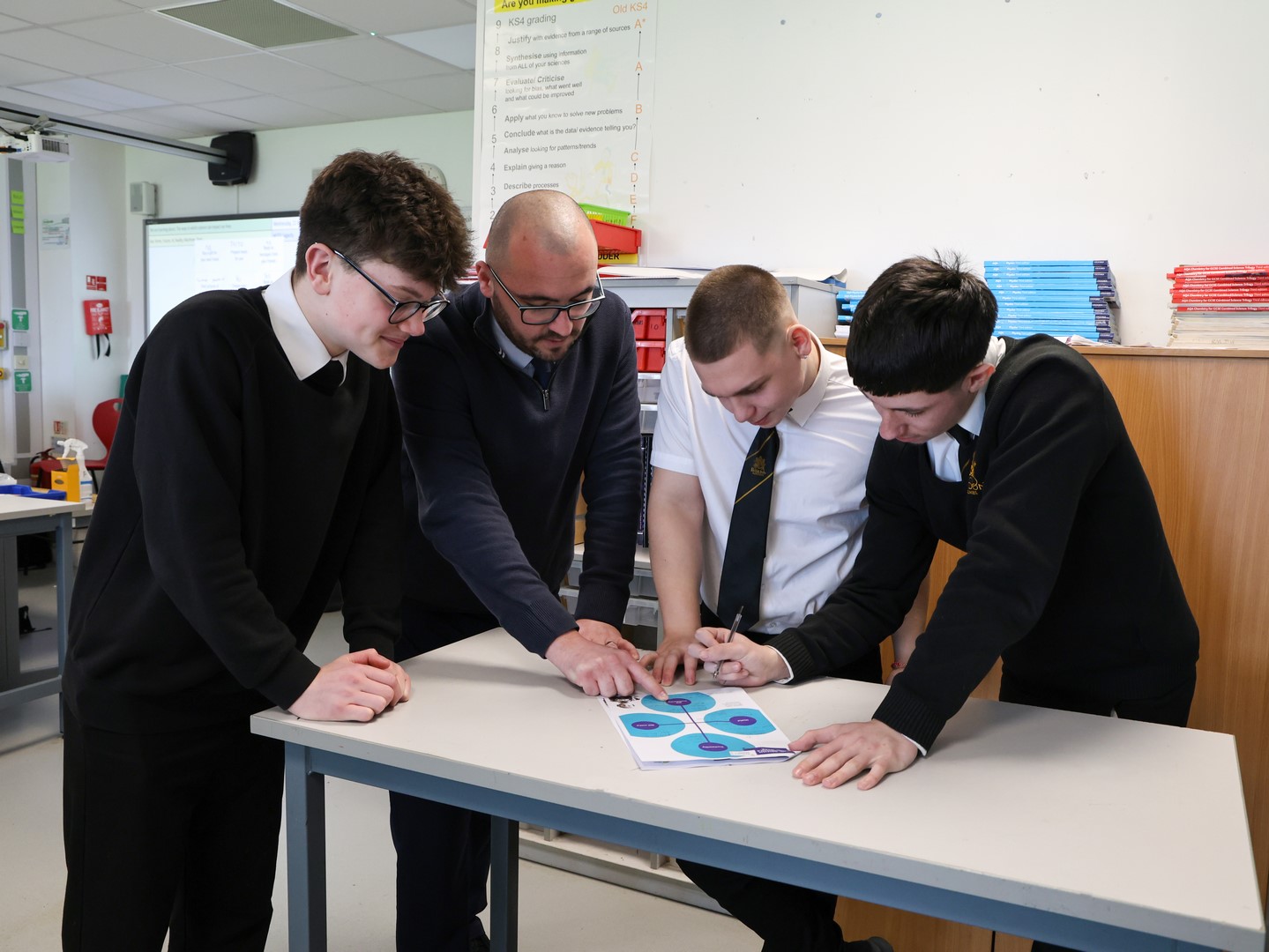
Our lessons are based upon research from cognitive science to ensure that we give the best possible structure for students to be successful. They follow a structure of:
- Retrieval Practice – beginning each lesson to help students remember past knowledge or skills and support it becoming secure in their long-term memory
- Learning Intentions – we share the learning intentions for the lesson so that students know what they are learning, why and the success criteria
- I Do - this part of the lesson is where the teacher models their thinking and explains new knowledge or skills in small steps
- We Do – the students then have a chance to apply their learning with the support from the teacher
- You Do – when the students are ready to practice and apply what they have learnt independently
Before moving through the stages of the lesson, teachers will also use checks for understanding. These could be Hinge Questions to see if the class are ready to move on, or if further explanation needs to be given. We also use Show Me Boards, these are mini whiteboards that the students hold up at the same time so teachers can see everyone’s answer at the same time. This then supports the teacher in helping individual students who may need a further explanation or show that the whole class need to re-visit a key part of the learning.

R Rees
Headteacher